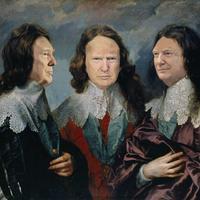
A version of this piece appeared in The Sunday Times on 2 April, 2023
There is nothing especially unusual about an elected politician being a criminal, even – or perhaps, especially — in the United States. So far in the twenty-first century, more than twenty members of Congress have been convicted by the courts, including former House Speaker Dennis Hastert, who was imprisoned for sexual offences. At the state level, there have been countless more, including the dramatic case of Illinois Governor Rod Blagojevich, who was arrested by federal agents and charged with bribery in 2008 while still in office.
So why do commentators regard former President Donald Trump’s indictment as so uniquely incendiary? It is not, after all, as if it is unexpected.
A clue lies in a remark by presidential historian Michael Beschloss, who told MSNBC’s Joy Reid that “tomorrow…in terms of American history, we will be waking up in a different country. Before tonight, presidents in this country were kings.”
The essence of kingship is to be formally accountable to no one other than God. Throughout history, bringing down a king has felt deeply transgressive, even to the most rabid of republicans, and however well-deserved the toppling. Deep in our collective psyche is a nagging feeling that to do so is to upend the natural order. The leaders of the American Revolution, steeped in the history of England and the classical world were well aware of this. As Benjamin Franklin observed during the Constitutional Convention in 1787, “there is a natural inclination in mankind to Kingly Government.”
Although some other members of that convention—Alexander Hamilton, for example—would have quite liked to create a real American monarchy, that was never a viable option. But they did the next best thing: they created an elected republican king. George Washington, who had become a head of state with only monarchs as role models, assumed that if the new republic had any chance of being taken seriously, he had to personify at least some of the attributes of a king. He hosted courtly levees, was painted in pseudo-royal garb and adopted the title “His Excellency.” His successor, John Adams, likewise insisted that the presidency had to embody “Splendor and Majisty.” Some presidents have made a point of rejecting any monarchical trappings, but many have not. Always happiest in the limelight, Ronald Reagan loved pomp and circumstance, as, of course, did Donald Trump, whose lust for glamour and gold plate gave him the appearance of a knock-off American version of the “Sun King,” Louis XIV.
But even those presidents who haven’t swaggered like kings have inherited the prerogative powers and vast executive authority that the founders assumed were essential for good government. No Prime Minister in a parliamentary system has anything like the sweeping latitude of an American president. Numerous presidents have been attacked for behaving like monarchs – Andrew Jackson’s opponents called him “King Andrew I” for example, while Teddy Rosevelt became known as “Theodore Rex”—but this has been such a persistent trait in American politics that clearly acting like a king is a function of the office not just the overweening ambition of those who inhabit it. Among the presidential prerogative powers is the right to pardon criminals. Trump would probably not have been the first president to be indicted had Gerald Ford not issued a proclamation on September 8, 1974, pardoning his predecessor Richard Nixon for any crimes he “may” have committed against the United States.
Ironically, the founders created a monarchical presidency just as British monarchs were ceding authority to parliament. By the mid-Victorian era, the constitutional writer Walter Bagehot could famously observe that in Britain a republic had insinuated itself beneath the folds of a monarchy. The reverse could be said of the United States, where a proud republic has sustained a head of state—albeit an elected one—with more than a whiff of kingship about him (and thus far, of course, it has always been a him).
The monarchical prerogative powers of the president are not, however, just an eighteenth-century legacy, but of a powerful ideological project within the Republican Party. In 1987, Dick Cheney, then a Republican member of Congress, was the joint author of a minority report on Ronald Reagan’s alleged abuses of power in the Iran-Contra scandal. In it, citing examples from American history, he argued that presidents would and should, on occasion, “feel duty bound to assert monarchical notions of prerogative that will permit him to exceed the law.” When Cheney was Vice President to George W. Bush, he put this theory into practice, setting aside established law and precedent in the interests of the higher imperative, as he saw it, of national security. Democratic presidents, including Biden, have unhesitatingly used sweeping, kingly executive power, but it is a distinctly Republican project to make the case that presidents are above the law.
Some of the outrage at Donald Trump’s indictment is no doubt as confected as the pretence of Fox News anchors to genuinely believe that the result of the 2020 election was fraudulent. But some of it is rooted—at least in part—in the shock at seeing someone legally untouchable brought down to the level of the commoner.
One of Shakespeare’s favourite themes is the dislocating moment when a king’s folly leads him to suffer the fate of mere mortals. The indictment of Donald Trump may well be that moment for the American presidency and people. Stormy Daniels would no doubt agree with the Bard that, “His ceremonies laid by, in his nakedness he appears but a man.”
 Adam Smith: Historian
Leave a comment