-

The first time I visited the American South, sometime in the late 1990s, I took at tour around one of those elegant plantation houses–I think it was in South Carolina–with a Spanish moss-covered avenue of trees, a shaded veranda on which to sip one’s mint julep, and discretely placed slave quarters. The lady showing us…
-
A few days ago President Trump’s Chief of Staff John Kelly told Fox News that the Civil War was caused by the “lack of an ability to compromise”, that it was “fought by men and women of good faith on both sides” and that General Robert E. Lee was an “honorable man.” Frankly, it would…
-

This is an edited draft of a lecture I have been writing, which in time may grow into a little book about the concept of compromise in American political life from the Revolution to the present day. Compromise must surely be the most ambivalent concept in modern politics. It can be a virtue or a…
-
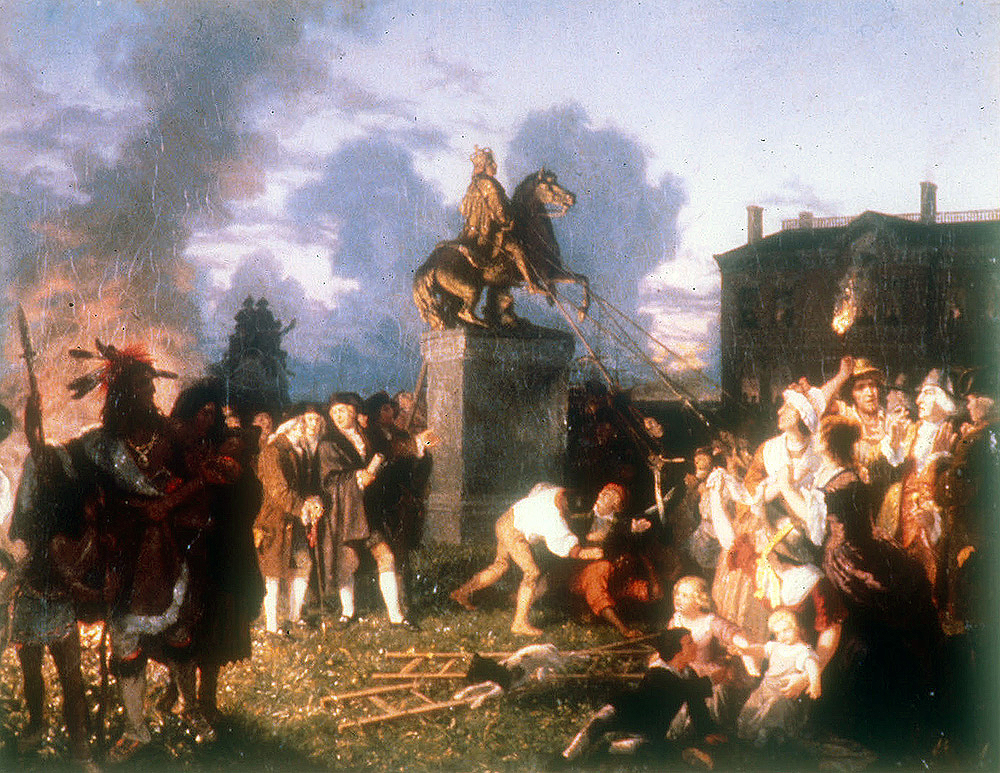
This is a piece I wrote for BBC World History Magazine’s September 2017 issue. The whole point of a pedestal is to elevate whatever’s on it. That’s the thing about statues: they demand not just attention but reverence. And because they’re sited in prominent public places, the intention is always to make a statement. That…
-

Inscribed above the dais in the wood-paneled Gustave Tuck Theatre in University College London is a quotation from Deuteronomy: “Remember the Days of Old; Consider the Years of Each Generation.” It’s a poetic and even rather inspiring injunction but if you think about it too much it’s not obvious how to live up to it.…
-

The aim of historical writing is to convey complexity with clarity, isn’t it? We know that the world is an infinitely varied and confusing place. Yet we also know that without trying to impose some kind of schema, all we’re left with is anecdote. It can be hard enough, sometimes, to uncover the dots, but…
-

A hundred years after the US declared war on Germany, I was at the main US military cemetery at Romagne-sous-Montfaucon and there was absolutely no one there at all other than me, the battlefield historian I was interviewing and my radio producer. This is a very empty part of France. You can drive for miles…
-
Recently I made a series for BBC Radio 4 called “Trump: The Presidential Precedents”. It told the stories of six previous US presidents who had won elections by promising to shake up a corrupt establishment and restore government by, or at least for, the little guy. From Andrew Jackson, the first westerner to win, to…
-

Among Donald Trump’s accomplishments is inadvertently stimulating popular interest in epistemology. “Post-truth” is the Oxford English Dictionary’s 2016 “word of the year”—a judgment based largely on the number of times it’s been invoked by journalists discussing the politics of the UK European referendum and the US presidential election. In a post-truth world, politics is conducted…
-
I’ve been working on a radio series about previous presidential elections (to be broadcast on BBC Radio 4 every day at 1.45pm in the week beginning January 16) with the aim of providing some historical context for our present political moment (Mr D. Trump, to remind you, if you’d forgotten, will be inaugurated on January…
-
On election night last Tuesday, I was in New York. I watched Trump’s victory speech in a Sky News studio where I’d been offering some occasional undigested thoughts. A little later, when I emerged into Time Square in a dank pre-dawn hour, drunk Trump supporters were chanting “lock her up” and “build the wall”. One…
-
A version of this blogpost appeared in the November 2016 edition of BBC History Magazine. It accompanies my BBC Radio 4 series, The Robber Barons. Railroad bosses were not supposed to order their own freight cars to be burned. In 1859, however, the superintendent of the western division of the Pennsylvania Railroad – a 24-year…
-
Whenever the French have had a revolution since the first great eruption of 1789, they’ve re-written their Constitution and started over again — so the current French state is the Fifth Republic. Over the same period, in contrast, the USA appears to have had one stable Constitutional order. But appearances can be deceptive. Beneath the…
-

This post is based on a review essay I published in the Times Literary Supplement in June 2015 Tom Taylor was the author of the play Lincoln was watching when he was shot. At least, he’d written the original script. Taylor had written a rather stilted comedy of manners in which a straw-sucking Vermonter called…
-

In the last twelve months we have lost two great historians of the United States: William Brock and Michael O’Brien.* I remember them both with admiration and affection. They were men of different temperaments, backgrounds and generations, but beneath the surface were some similarities that tell us much about the practice of history at its…
-
It’s not surprising that its residents so readily describe Santa Barbara as paradise. On a fertile plain between steeply rising mountains and a sandy, south-facing stretch of the California coast, the city basks in year-round warm sunshine. I was there at the end of January, when the contrast with the wintry chill of London was…
-
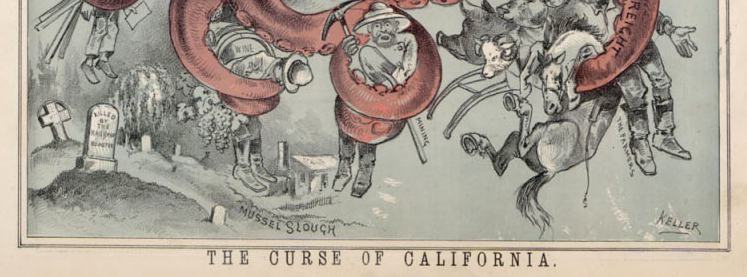
A few weeks ago I found myself in the middle of California’s central valley, standing on the edge of a road with straight lines of fruit trees stretching regimentally in every direction. It is a totally flat landscape – more like the Midwest than most people’s image of California. On a clear day I probably…
-

A frontier gunfight May 11, 1880: a gunfight in a wheat field six miles northwest of Hanford, CA, the main town in what was then known as the Mussel Slough area of Tulare County (now Kings County) in the Central Valley. Seven men were killed or mortally wounded that day. The fight was over land.…
-
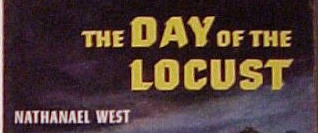
When I went there, I thought that Alta Loma terrace, in Hollywood, CA, was a pretty, rather enviable place to live. Unusually for any residential street in America the houses are arranged on either side of a footpath instead of a road (although reassuringly there’s vehicle access to the rear of the houses) and the…
-
Historians, it seems to me, are temperamentally divided into those who gravitate to the particularities of studying people — and those who want to describe big patterns and large-scale processes of change. For some the fascination of the past is in ultimately in understanding how people lived, thought, coped. For others it is in answering…
-
Subscribe
Subscribed
Already have a WordPress.com account? Log in now.
 Adam Smith: Historian