US History
-
This article appeared in The Sunday Times July 3, 2023 The US Supreme Court’s ruling on Thursday that race-based affirmative action in university admissions is unconstitutional marks the end of an era. For half a century, the court has upheld the right of educational institutions — and by implication also employers — to factor race…
-
This article appeared in The Sunday Times August 26, 2023 Freedom was in the air at the Republican presidential candidates’ debate last week. The former vice-president Mike Pence said that “America needs to stand for freedom”; the governor of North Dakota, Doug Burgum, said that “we need to get back to freedom”; and the businessman…
-
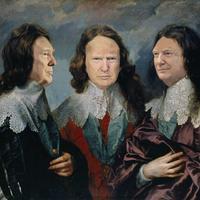
A version of this piece appeared in The Sunday Times on 2 April, 2023 There is nothing especially unusual about an elected politician being a criminal, even – or perhaps, especially — in the United States. So far in the twenty-first century, more than twenty members of Congress have been convicted by the courts, including…
-
A version of this article was published in The Sunday Times on 29 April, 2023 Even bearing in mind the tendency of people on the left to political doom-mongering, it is striking how many Democrats are uneasy about the wisdom of Biden’s decision to seek a second term. Polls show that more than half do…
-
A version of this piece appeared in The Sunday Times on July 2, 2022 None of us have seen the United States as divided and distressed as it is now. In 1968, Richard Nixon spoke darkly about cities in flames, but there were far fewer violent deaths on American streets than today. In 1974, Gerald…
-

This is a piece I wrote for BBC History Magazine on January 15, 2021 Before Trump, no US President has incited a mob in the hope of disrupting the legislature from ratifying his election loss. Yet when a chorus of commentators repeated “this is not who we are” as they watched footage of Trump supporters…
-
I wrote the following piece for the January 2021 issue of BBC History Magazine. On the fourth of March, 1801, in the city of Washington — then just a half-built, muddy encampment on the banks of the Potomac – a living Head of State peacefully gave up power and a new one took over. The…
-
This is a review I wrote for the Journal of the Early Republic of “There is a North”: Fugitive Slaves, Political Crisis, and Cultural Transformation in the Coming of the Civil War. By John L. Brooke The premise of this important book is that to understand the coming of the civil war we need to…
-
This is a piece I wrote for The Journal of the Abraham Lincoln Association which was published in their Summer 2020 issue. They slightly edited it. This is the full version. Review of Greg Weiner, Old Whigs: Burke, Lincoln & the Politics of Prudence Greg Weiner thinks that Lincoln was a Burkean. There are good…
-
This is a review I published in History Today of Jill Lepore’s fabulous book, These Truths One of the ways in which the current President of the United States differs from all his predecessors, from Washington to Obama, is that unlike them he doesn’t speak of the special mission of his country. When he talks…
-
This is the text of a piece I’ve just written for BBC History Extra A few questioned its necessity, but for most of the delegates to the constitutional convention in Philadelphia in 1787 giving Congress the right to impeach the President was an obvious move. It was not to be used lightly. It was an…
-

The first time I visited the American South, sometime in the late 1990s, I took at tour around one of those elegant plantation houses–I think it was in South Carolina–with a Spanish moss-covered avenue of trees, a shaded veranda on which to sip one’s mint julep, and discretely placed slave quarters. The lady showing us…
-
A few days ago President Trump’s Chief of Staff John Kelly told Fox News that the Civil War was caused by the “lack of an ability to compromise”, that it was “fought by men and women of good faith on both sides” and that General Robert E. Lee was an “honorable man.” Frankly, it would…
-
A version of this blogpost appeared in the November 2016 edition of BBC History Magazine. It accompanies my BBC Radio 4 series, The Robber Barons. Railroad bosses were not supposed to order their own freight cars to be burned. In 1859, however, the superintendent of the western division of the Pennsylvania Railroad – a 24-year…
-

This post is based on a review essay I published in the Times Literary Supplement in June 2015 Tom Taylor was the author of the play Lincoln was watching when he was shot. At least, he’d written the original script. Taylor had written a rather stilted comedy of manners in which a straw-sucking Vermonter called…
-
When I went there, I thought that Alta Loma terrace, in Hollywood, CA, was a pretty, rather enviable place to live. Unusually for any residential street in America the houses are arranged on either side of a footpath instead of a road (although reassuringly there’s vehicle access to the rear of the houses) and the…
-

The extraordinary thing about the Gettysburg Address, which was given 150 years ago on Tuesday, is that people still venerate it as they do. It is, on one level, a pretty standard piece of wartime rhetoric, polarising the issues and claiming that the stakes are universal, eternal and profound. Churchill did the same sort of…
-

The folks who produce BBC History Magazine have just published a special issue called The American Civil War Story. I had a couple of pieces in it, including one that seeks to explain why the South lost the war in less than a thousand words. This is it: Why the South Lost the Civil War…
-
The 1860 Presidential Election was one of the most consequential elections in world history, since it directly triggered the American Civil War. (Others on the shortlist include the series of three Reichstag elections in 1932-3). It was in response to the election of Abraham Lincoln that the first tranche of slave states seceded, and Lincoln…
-
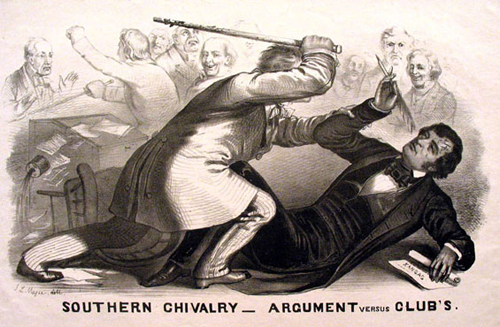
Well, no, not really. Slavery did that. But democracy — by which I mean (1) a participative relatively open political system; (2) newspapers that were often very partial and partisan; (3) a political culture in which the idea of majority rule was idealised — may well have made the war more likely. The US had…
 Adam Smith: Historian