-
I spend much of my professional life reading the words of people who were passionate advocates of Union, and, indeed, who declared their willingness to die for it. Last night I gave a talk about my new biography of Abraham Lincoln, who was the most articulate advocate of Union of all. The audience, at the…
-
Last year, the government’s proposed new history curriculum caused intense debate about what history children should learn. Should the black nurse Mary Seacole be taught, or (implicitly) is her inclusion in a school history curriculum a sop to political correctness? Should the content of history lessons be a story of Britain or of the world?…
-
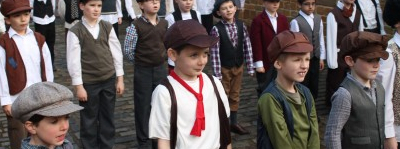
If you were a teacher, would you take your children somewhere where you knew they were going to be shouted at and made to do household chores for no pay? Perhaps that’s best left as a rhetorical question. On school trips to Holdenby House in Northamptonshire, where Charles I was held prisoner by the Scots,…
-

I was on Radio 3’s Night Waves last night presenting a short package about the legacy of the Gettysburg Address. You can listen to it here. On Radio 4, James Naughtie presented a documentary on how and why Lincoln came to give the speech (I appear in that programme as well). Here is the text…
-

The extraordinary thing about the Gettysburg Address, which was given 150 years ago on Tuesday, is that people still venerate it as they do. It is, on one level, a pretty standard piece of wartime rhetoric, polarising the issues and claiming that the stakes are universal, eternal and profound. Churchill did the same sort of…
-
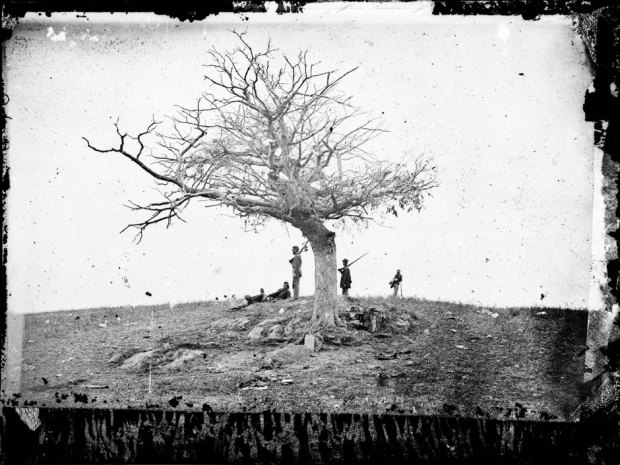
It is, I suppose, an unalienable truth that the American Civil War was, in some senses a Revolution. Certainly that was true for enslaved African Americans who were legally freed, often displaced, sometimes reunited with separated family members, and, in a few cases, managed to acquire new wealth and some improvement in their political status…
-
In the UCL History Department, we’ve been trying to work out how best to support the often difficult transition from school to university study. We’ve come up with (what I think is) an exciting new curriculum which is being introduced for new first years in September. I’ll be convening one of the new first year…
-

The folks who produce BBC History Magazine have just published a special issue called The American Civil War Story. I had a couple of pieces in it, including one that seeks to explain why the South lost the war in less than a thousand words. This is it: Why the South Lost the Civil War…
-
The 1860 Presidential Election was one of the most consequential elections in world history, since it directly triggered the American Civil War. (Others on the shortlist include the series of three Reichstag elections in 1932-3). It was in response to the election of Abraham Lincoln that the first tranche of slave states seceded, and Lincoln…
-

The much-gossiped about new draft national curriculum for history has finally been published. It’s only six-and-a-half pages and is simply a list of stuff that’s happened in English history. Rightly, prominent historians have condemned it for its ‘little England’, facts-over-context character. Unlike some, I have no problem with the idea that history is about ‘citizenship’,…
-
Stephen Spielberg’s Lincoln is really a phenomenally good film. Usually historians go to gripe at historical epics like this. There is no shortage of dreadful films about US history that perpetuate horrible historical inaccuracies. This is not one of them. While I have plenty of quibbles with the detail, the big historical picture feels right.…
-
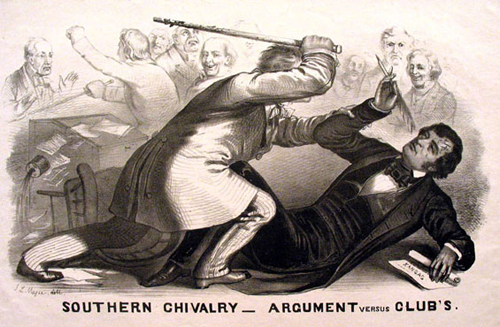
Well, no, not really. Slavery did that. But democracy — by which I mean (1) a participative relatively open political system; (2) newspapers that were often very partial and partisan; (3) a political culture in which the idea of majority rule was idealised — may well have made the war more likely. The US had…
-
It is one of the most familiar cries in American politics: partisanship is the problem. Think of the words associated with partisanship — deadlock, gridlock, extremism, vitriol. When something is described as ‘partisan’ it’s the same as saying it’s become near-insoluble. It is a deadly paradox — the United States has a political system dominated…
-

A couple of years ago I did some work on the image of Abraham Lincoln in England. It’s an interesting subject because at certain moments Lincoln has really mattered — not just in the United States but in England too. People cared about him. In the 1860s miners in Northeast England bought cheap portraits of…
-
Subscribe
Subscribed
Already have a WordPress.com account? Log in now.
 Adam Smith: Historian